BMI charts, not so bad after all
When it comes to BMI charts the, BMI stands for Body Mass Index. It’s a quick and easy reference guide for researching and categorizing health and disease risk factor with body fatness. It’s very simple to use because a researcher or health care provider only needs to know your height and weight.
The BMI chart was created over 100 years ago as a way of charting body ‘fatness’ or ‘thinness’. With the influence of Ancel Keys (visionary scientist way ahead of his time) BMI became a prominent tool in the 1970’s for assessing population health risks.
There is a criticism that the BMI doesn’t account for different ‘frame’ sizes of people (endomorphs and ectomorphs) or athletes who have built up their muscles to a much larger degree than the regular population. Both of these criticism’s seem to be weak as true ecotmorphic or endomorphic people are very rare…in other words, for MOST of the population the BMI works just fine, and that was the point in the first place.
The athlete argument doesn’t hold much water either, as they represent a very small percentage of the population and many of them use steroids and other drugs that artificially elevate their lean body mass. In other words, the BMI was never meant to be applied to people taking steroids and GH.
So what about ‘natural’ athletes and bodybuilders who don’t use drugs but just build lots of muscles? Surely they wouldn’t be in the ‘normal’ BMI range…right? Maybe not!
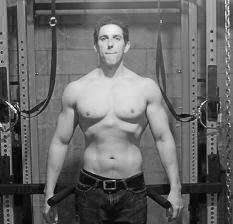
My bodyweight fluctuates between 180-183lbs. In both cases I am still within the normal BMI range. And this is where the argument about athletes being in the ‘overweight’ BMI range because of increased muscle mass falls apart for me.
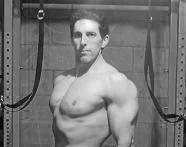
In these pictures I’m still within the normal BMI range…and I don’t think I
look too small or lacking in muscle development. In fact I’ve spent the past 15 years trying to build as much muscle as I can…and I STILL fall within the ‘normal’ BMI range. If anyone was a candidate for being ‘overweight’ due to muscle mass I thought surely I would be it…but nope I’m still ‘normal’.
So the argument that athletes can build enough muscle to somehow push them out of the normal BMI range seems a bit wonky to me (unless of course they are using steroids or were true endormorphs to begin with…which is an exceedingly small portion of the population). Look at those pictures of me again, do I really look like I could possibly get bigger? Do I look like I NEED to be bigger? AND do I look unhealthy at the size I am?
The problem people have with the BMI is not the chart itself, but what the chart MEANS to them. The chart is meant to show ‘fatness’ and categorize it as normal or abnormal on both the high and low end. The key word here is ‘normal’.
What SHOULD be normal for a human body and what has BECOME normal in modern western societies are two different things.
The BMI chart shows what SHOULD be normal, not what is currently considered normal.
If most of the population is overweight (according to the BMI chart) the error in logic could be that the population is right and the BMI chart is wrong.
I think many people have a sharp emotional reaction to things like the BMI chart because it categorizes you in a way that feels discriminatory and prejudicial. Of course there is no emotion behind the BMI chart, it’s just a
mathematical equation…but there is some thought and research into it, it’s not just a random idea, so you know there is some validity to the category you’ve been placed in according to the chart. And this is why it bothers people. If there is some good reason why you are categorized as ‘overweight’ then you’re faced with the following dilemma about your belief in the normalcy of your current body size:
Either the chart is wrong, or YOU are wrong.
It’s much easier to dismiss the chart as being inaccurate and not useful for your specific body shape and size or whatever excuse you like, than it is to accept the fact that perhaps you’re in fact simply overweight.
The final point on this topic is the view from being in the normal category vs the overweight or obese categories.
I used to be much heavier than I am now and I used all the same excuses explaining away the BMI as antiquated and outdated and didn’t account for the mountains of muscle I had built over the years yadda yadda. In reality, I was just fat.
Once I went through my cut down and got rid of all the excess weight I ended up right where the BMI chart predicted me to be at the high end of the normal range…which makes perfect sense as I’ve built as much muscle as I can without drugs.
If I’m currently in the normal category, and I’ve spent my whole life trying to build muscle, and all of my measurable health markers are in very good shape, and I’m happy with the look and shape of my body, and I have a golden Adonis Index ratio…then how is it possible for me or anyone with roughly my frame (which is average) to actually be in the overweight category without simply having more fat mass on their body and subsequently looking worse than I do right now?
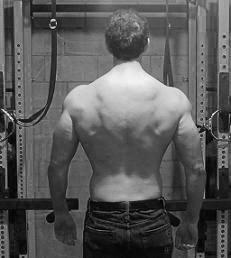
In other words, if some people suggest the BMI cutoff for ‘overweight’ is too low, then what does that make me in these pictures? Underweight?
Or is it that people who don’t like the category the chart puts them in have an immediate reaction of dismissing the chart as being wrong instead of heeding the guidance it provides to lose some weight. This of course is cognitive dissonance at its finest.
For anyone who is in the ‘normal’ range the BMI chart seems to make perfect sense. It seems to me that if more people were in the normal range there wouldn’t be any argument at all about the BMI chart. With that said I think it’s entirely possible to be in the ‘overweight’ category and in perfect health and look good. But I think this designation applies to a rare group of people who have the ability to build very impressive muscle mass drug free. For the majority of the population the standard BMI chart still seems to be just fine.
This article written by,
John Barban
who also wrote:
Adonis Effect
back to - body mass index chart