Ideal Body Measurements for Men
I
read somewhere that only women are insecure about their bodies and that
men do not try to achieve the ideal body measurementsfor men, but I
remember when I was growing up in Jr High and High
School having problems knowing who I was. My Dad was about 6
foot and 200 pounds. He played football as a linemen in a
small high school. I thought I too would play line.
I did not think about what a difference a high school that
was at least 10 times as big would make. I did not figure it
our until I was doing lineman drills in high school with guys that were
twice my size. Now at 58 I love my 5"10' 165 pound
body. It is average and not great at anything, but it alows
such flexibility in what I do. I average lifting weights
about 10 minutes a week which alows me to lift heavy boxes and other
objects. But I particularly love to run. My favorite thing to do is
grab my binoculars and head to the park to look
for birds... So when setting your goal to achieve the perfect
body, think about function and what you want to be able to do as well
as shape and % fat.
Ideal Shape
The simple answer according to
one source is that a mans chest circumference should be 10 inches
larger than his waist circumference.
Here is the best answer
I have gotten from a body builder who also has an excellent weight loss
program online( Burn the Fat Feed the Muscle, which
I used):
Steve Reeves for example, was known as one of the most symmetrical and aesthetically pleasing bodybuilders of all time, even though he was not huge” by today’s standards.
Reeves wrote about ideal measurements frequently and was always striving for his idea of perfection in this regard (and came close to achieving his own personal ideal). One of his criteria for ideal proportions included having his arms, calves and neck measure the same.
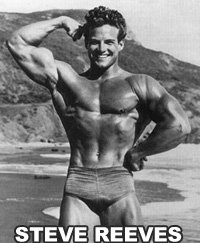
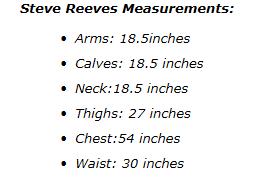
In his “classic physique” book, Reeves said his formula for “ideal proportions” was as follows:
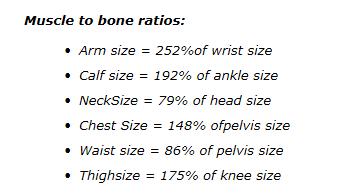
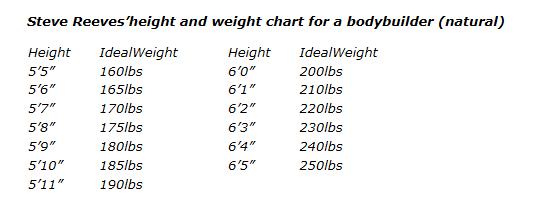
In the book Brawn, Stuart McRobert published the old “John McCallum formula for “challenging yet realistic” measurements for “hard gainers". His formula is based on wrist measurement and was also published in the book Super Squats:
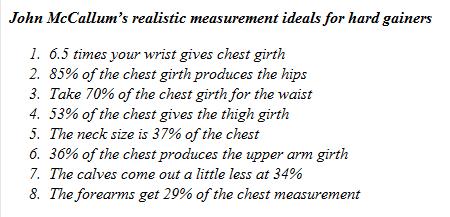
Incidentally, McRobert’s book Brawn has an entire chapter called “expectations” which discusses the truth about measurement claims.
I find all these measurement ideals very interesting, but personally I take them with a grain of salt.
Be careful with some of the formulas for “ideal measurements”, because if they were based on steroid using and or pro bodybuilders, you may get discouraged by trying to pursue an impossible goal for a natural bodybuilder or the measurements of someone with a totally different bone structure than you have.
Measurements - especially arm measurements - are also frequently exaggerated. Twenty inch arms, for example, are rare and when you actually see them in person, you realize just how massive they really are. But somehow beginners and natural athletes get the idea in their head that bodybuilding success means 250 pounds and a 20 inch arm.
The truth is, a 17 to 18 inch arm on a ripped 175-180 pound physique with excellent balance, symmetry and proportion can look much larger than it really is – it’s an optical illusion of sorts.
Some of these guidelines for “ideal proportions” are the “Grecian” or “classical” ideals while others are ideals for bodybuilders. In either case, keep in mind they are subjective – they’re just someone else’s opinion of what is an ideal measurement. The only opinion that matters in the end is your own.
Train hard and expect success,
Tom Venuto
Measurements to Percent Fat
Want
to find out what percent of your body is fat?
Body Fat Formula For Men
Step
1: Multiply total body weight x 1.082, then add 94.42 = Result 1
Step
2: Multiply waist measurement x 4.15. Then subtract Step 1 from Step 2 = Lean Body Weight
Step 3: Subtract lean body weight from total body weight = Lean Body Mass
Step 4:
Multiply Lean Body Mass x 100, then divide it by total body weight =
Body Fat Percentage.
Fat Percentage
Categories:
Fat
Men 2-4%
Women 10-12%
Athletes
Men 6-13%
Women 14-20%
Fitness
Men 14-17%
Women 21-24%
Acceptable
Men 18-25%
Women 25-31%
Obese
Men 25%+
Women 32%
+
Ideal Body Measurements by Function
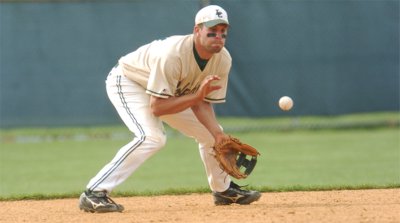
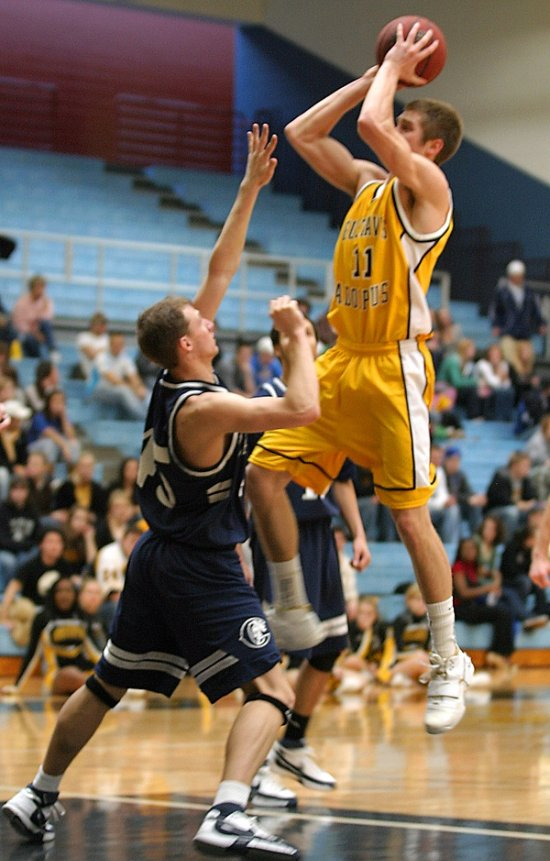
I started of this web page talking about how I enjoy running. What do you like to do? What do you want to be able to do? What were you born to do? Many years ago I read a great book which I can no longer find on Sports Selection. It talked about how certain body shapes were better able to perform different functions. People with low center of gravities tend to do better at things like surfing. Sprinters tend to be somewhat stocky. Long distancerunners have to be thin. Basketball players tall, and gymnast short.
Why are the best: gymnast,wrestlers,and posibly knights short? Strength is a function of cross area (distance squared) and weight a function of volume (distance cubed). It is pure physics. That is why ants are so much stronger for their size than elephants. I use pictures of those that play sports as examples of ideal body types for funtion, but for our ancestors it was a matter of survival and depending on the environment and task at hand we needed (and still need) all of the different body types.
Ideal Body Measurements for MenWhat Women Like
If
you ask women: What are the ideal body measurements for men? What will they say? Being a man, I did not know so I went to the blogs
to find out. they would usually answer with the name of a
movie star, rock star, or athlete. Although the answers were not
specific, they did give hints. for example the athletes were usually soccer players, tennis players, swimmers... not weight lifters or football linemen or tall basketball players. These body types were not extremely tall nor did they have extremely big muscles.
These answers from the blogs seem to confirm some of the research. According to visual perception of male body
attractiveness by
Fan, Dai, Liu and Wu. women prefer men with a volume to height index of 17.6 liters per meter squared. (men thought
18.0 litters per meter squared would have been preferred.)
These numbers did not mean much to me except that men think that women like heavier guys. Maybe the women are right, forget the numbers just look at the pictures.
But I am a guy and don't listen so here are some more numbers. Women like men that are 1.1 times taller than themselves, women like men with shapes like an inverted triangle (chest bigger than waist) . Now we are getting somewhere.
Both research and classic ideal measurements (think Michaelangelo's David) point to the golden rule of 1.6. The ratio of shoulders (measure at widest point usually half way between nipple and collar bone) to waist (for men measure between belly button and hip bone) This 1.6 is about a 1.4 ratio of chest to waist which is easier to measure. By the way, Steve reeves above was way too big with a 1.8 chest to waist ratio (54/30). Muscle and Fitness
suggests a 1.33 ratio. I think that would make a good goal for most of us. See what Muscle and Fitness suggests
as ideal body measurements for men.
Based on what Muscle and
Fitness Magazine says are ideal body measurements, I have come up with this chart to help you keep up with your goal of improving your body, if that is your goal:
Ideal Body Measurements for Men Chart
Find out which women and which men have ideal bodies? Do you have a different opinion? This page has a place to voice those opinions:
Ideal Body Measurements for Women and Men
So much for men's bodies. Tell us which women you think have ideal bodies by going to
Ideal Body Measurements for Women
Sometimes a picture is worth a thousand words. On Pinterest I have looked to see what the women like.
Follow Ideal Weight's board Ideal Weight of Men on Pinterest.